
SUMMARY
- Kansas experiences frequent hailstorms that can cause anything from minor dents to significant vehicle damage.
- Not all hail damage requires repainting. Paintless Dent Repair (PDR) may be an effective option when the paint remains intact.
- A professional inspection can identify hidden damage to body panels, glass, trim, and safety systems.
- Document the damage promptly and notify your insurance company if you plan to file a claim.
- Choosing an experienced collision repair facility helps ensure repairs are completed using proper procedures and quality materials.
- Newman’s Auto Body & Repair proudly serves Olathe drivers with professional hail damage repair at its Fir Street location.
Introduction
Hailstorms are a familiar part of life in Kansas, especially during the spring and summer months. Even a brief storm can leave dozens of dents across your hood, roof, trunk, and doors, while larger hailstones may crack glass, damage trim, or affect other exterior components. Because hail damage is often more extensive than it first appears, having your vehicle professionally inspected is one of the most important steps after a storm.
Understanding how hail damage is repaired, when Paintless Dent Repair is appropriate, and how the insurance process typically works can help Kansas drivers make informed decisions while protecting the appearance, safety, and value of their vehicles. According to the Kansas Department of Insurance, drivers should document storm damage promptly and contact their insurance provider to begin the claims process.
Kansas Hail Storms Can Cause More Than Cosmetic Damage
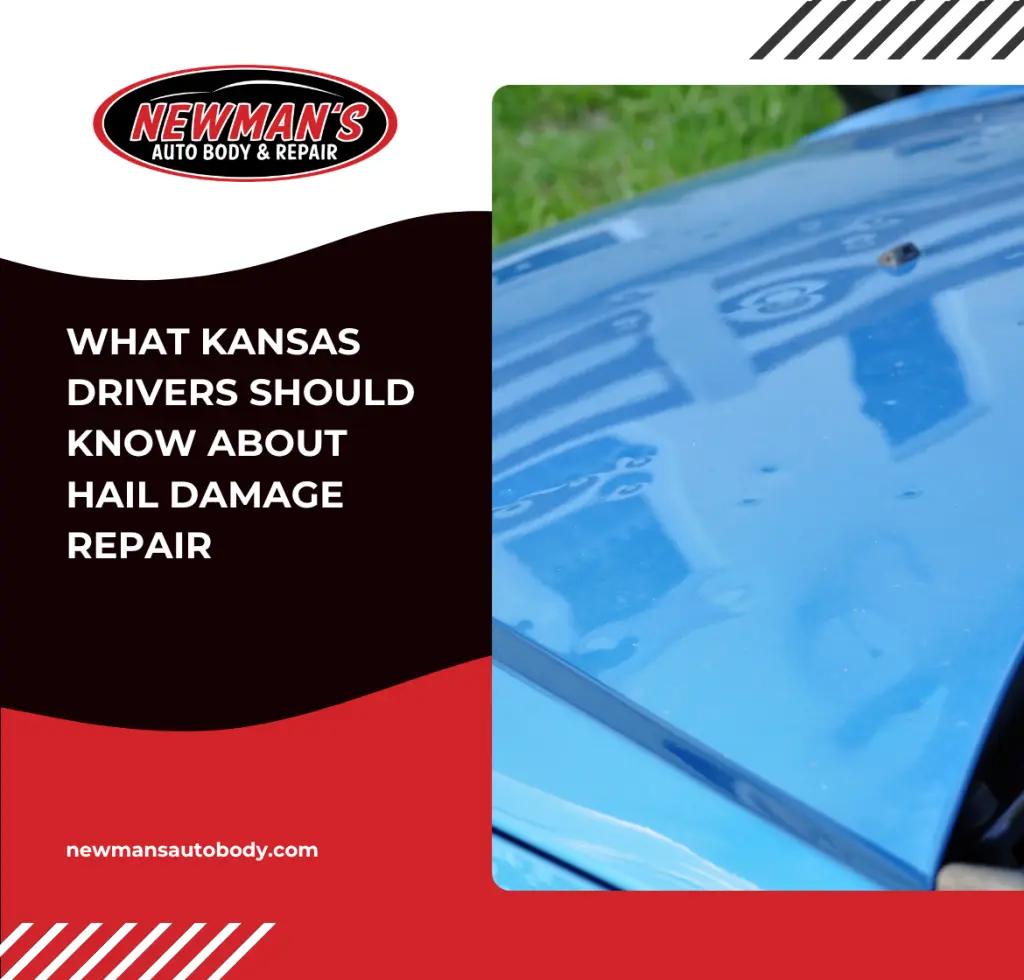
Kansas regularly experiences severe thunderstorms capable of producing hail of various sizes. While small dents are the most common result, larger hailstones can create much more significant damage.
Common hail-related damage includes:
- Dents on the hood, roof, trunk, and doors
- Chipped or cracked paint
- Broken windshields
- Damaged side or rear glass
- Broken mirrors
- Damaged moldings and trim
Some damage may not be immediately visible without proper lighting or a professional inspection. Even if your vehicle appears drivable, hidden damage should still be evaluated after a significant storm.
The National Weather Service explains that hail produced by severe thunderstorms can cause extensive property and vehicle damage within only a few minutes.
The size, density, and speed of hailstones all influence the amount of damage a vehicle may sustain. Smaller hailstones may leave only shallow dents, while larger hail can dent multiple body panels, crack windshields, shatter mirrors, and damage roof moldings or exterior trim.
In severe storms, hail is often accompanied by strong winds that can blow debris into parked vehicles, creating additional scratches, dents, or broken glass. These combined impacts can make the damage more extensive than it initially appears.
Hidden damage is another concern following a hailstorm. While the exterior dents are usually easy to identify, water may enter through damaged seals or cracked glass, potentially affecting the vehicle’s interior or electrical components if left unaddressed. Damaged paint can also expose bare metal, increasing the risk of corrosion over time if repairs are delayed.
For newer vehicles equipped with cameras, sensors, or other advanced safety technologies, hail or flying debris may also affect components located near the windshield, bumpers, or mirrors.
Having your vehicle inspected promptly after a storm allows technicians to evaluate the full extent of the damage and recommend the most appropriate repair method. Addressing both visible and hidden damage early can help prevent additional problems, support a smoother insurance claim, and restore your vehicle before minor storm damage develops into more costly repairs.
Why Professional Inspections Matter
Not every dent tells the full story. Hail can affect areas that are difficult to inspect without specialized tools and lighting.
Professional technicians evaluate:
- Number and depth of dents
- Paint condition
- Glass damage
- Roof structure
- Body panel distortion
- Trim and molding damage
A thorough inspection allows technicians to determine the most appropriate repair method while documenting the damage for insurance purposes.
Professional hail damage repair helps identify both visible and hidden storm-related damage before repairs begin.
Paintless Dent Repair May Be the Best Solution
Many hail-damaged vehicles qualify for Paintless Dent Repair (PDR), a repair method that removes dents without sanding, fillers, or repainting when the factory finish remains undamaged.
PDR may be appropriate when:
- Paint has not cracked
- Metal has not stretched significantly
- Dents are accessible from behind the panel
- Structural damage is not present
Because the original factory finish is preserved, Paintless Dent Repair often provides excellent cosmetic results while reducing repair time.
Professional paintless dent removal can often restore hail-damaged panels while preserving your vehicle’s original finish.
Filing an Insurance Claim After Hail Damage
If your vehicle sustains hail damage, documenting everything before repairs begin is important.
Helpful steps include:
- Photograph all visible damage
- Record the date of the storm
- Contact your insurance company
- Schedule a professional inspection
- Save claim documentation
The Kansas Department of Insurance recommends documenting storm damage, maintaining repair records, and communicating promptly with your insurer throughout the claims process.
When taking photographs, capture the vehicle from multiple angles to provide a complete record of the damage. Close-up images of dents, cracked glass, chipped paint, and damaged trim should be paired with wider photos showing the entire vehicle.
If possible, photograph the vehicle before moving it, especially if the storm also caused fallen branches or other debris to strike the vehicle. These images can help establish the condition of your vehicle immediately after the hailstorm and provide useful information during the claims process.
Keeping organized records throughout the repair process is equally important. Save copies of your claim number, insurance correspondence, repair estimates, inspection reports, rental vehicle receipts if applicable, and any invoices related to the repair.
Maintaining a timeline of phone calls or emails with your insurance representative can also make it easier to answer questions if additional information is requested later. Well-organized documentation often helps reduce delays caused by missing paperwork or incomplete records.
Scheduling a professional inspection early allows qualified technicians to identify both visible and hidden damage before repairs begin. They can prepare a detailed repair estimate, document any additional issues discovered during the inspection, and communicate with your insurance company if supplemental repairs are needed.
Starting the claim process promptly and providing complete documentation gives your insurer the information needed to evaluate the claim while helping your vehicle move through the repair process as efficiently as possible.
When Traditional Auto Body Repairs Are Necessary
Although Paintless Dent Repair is highly effective in many situations, some vehicles require conventional repair techniques.
Traditional repairs may be necessary when:
- Paint has chipped or cracked
- Metal panels are severely stretched
- Glass has been damaged
- Structural components are affected
- Multiple repair methods are required
Professional vehicle body repair restores damaged panels, refinishes surfaces, and returns your vehicle to its pre-loss condition using manufacturer-recommended repair procedures.
Choosing the Right Hail Damage Repair Facility
After a major Kansas hailstorm, many repair facilities experience increased demand. Choosing a qualified, established repair shop helps ensure your vehicle receives quality repairs instead of rushed workmanship.
Look for a repair facility that offers:
- Experienced technicians
- Modern repair equipment
- OEM-focused repair procedures
- Insurance claim assistance
- Quality inspections
- Strong customer reviews
Drivers can learn more about Newman’s Auto Body & Repair and the company’s commitment to quality repairs, customer service, and professional collision restoration.
It’s also important to choose a repair facility that takes the time to perform a thorough inspection before recommending a repair plan. Hail damage varies from one vehicle to another, and a quality shop will carefully evaluate every affected panel, inspect the paint condition, and determine whether Paintless Dent Repair, conventional auto body repair, or a combination of both will produce the best results. Rather than offering a one-size-fits-all solution, experienced technicians tailor the repair process to your vehicle’s specific condition.
Communication is another key factor when selecting a repair facility. A reputable shop should clearly explain the repair process, provide realistic timelines, answer your questions, and keep you informed throughout the project.
If additional damage is discovered after repairs begin, the shop should communicate those findings promptly and work directly with your insurance company when supplemental approvals are necessary. This level of transparency helps minimize confusion and keeps repairs moving forward.
Repair quality should always take priority over speed alone. Facilities that follow manufacturer-recommended repair procedures and invest in ongoing technician training are better equipped to restore today’s vehicles safely and accurately.
You can also look for repair shops with OEM Certifications, as these demonstrate a commitment to meeting manufacturer repair standards and using approved repair methods. Taking the time to choose an experienced hail damage repair facility helps protect your vehicle’s appearance, safety, and long-term value long after the storm has passed.
Frequently Asked Questions
1. Does every hail-damaged vehicle need repainting?
No. If the paint remains intact, Paintless Dent Repair may restore the damaged panels without repainting.
2. Can hail damage affect my vehicle beyond dents?
Yes. Severe hail can damage glass, trim, mirrors, moldings, and other exterior components.
3. Should I file an insurance claim immediately?
It’s generally recommended to document the damage and contact your insurance company promptly after a significant hailstorm.
4. How do technicians determine the best repair method?
A professional inspection evaluates the condition of the paint, depth of dents, panel accessibility, and whether structural damage exists.
5. Is Paintless Dent Repair permanent?
When appropriate for the damage, Paintless Dent Repair permanently restores the metal without affecting the factory finish.
6. Can hail damage reduce my vehicle’s value?
Visible hail damage can affect resale value if left unrepaired, making timely repairs an important consideration.
7. Why choose Newman’s Auto Body & Repair?
Newman’s Auto Body & Repair combines experienced technicians, modern repair technology, OEM-focused repair procedures, and customer-focused service to help Kansas drivers recover after severe hailstorms.
Conclusion
Kansas hailstorms can arrive with little warning, leaving behind damage that ranges from small cosmetic dents to more extensive repairs involving glass, paint, and body panels. Having your vehicle professionally inspected after a storm helps identify all damage, determine the appropriate repair method, and support a smoother insurance claim process. Whether your vehicle qualifies for Paintless Dent Repair or requires more extensive restoration, quality workmanship plays an important role in protecting both its appearance and long-term value.
If your vehicle has been damaged by hail, visit Newman’s Auto Body & Repair at 611 S Fir St, Olathe, KS 66061, United States. Our experienced team is ready to inspect your vehicle, explain your repair options, and provide professional hail damage repairs that help restore your vehicle with confidence.
