
SUMMARY
- Paintless Dent Repair (PDR) removes dents without sanding, fillers, or repainting when the original paint remains intact.
- PDR is commonly used for hail damage, door dings, shopping cart dents, and other minor impacts.
- Not every dent qualifies for PDR. Deep dents, cracked paint, or stretched metal may require conventional auto body repair.
- A professional inspection determines the safest and most effective repair method.
- Choosing an experienced repair facility helps preserve your vehicle’s factory finish and long-term value.
Finding a dent on your vehicle can be frustrating, whether it was caused by a Kansas hailstorm, a shopping cart, or another vehicle’s door in a parking lot. Fortunately, not every dent requires extensive body work or repainting. In many cases, Paintless Dent Repair (PDR) offers an efficient solution that restores the damaged panel while preserving the original factory finish.
However, Paintless Dent Repair is not appropriate for every situation. The size, depth, and location of the dent, as well as the condition of the paint, all affect whether PDR is the right choice. Understanding how this repair method works and when it is recommended can help Olathe drivers make informed decisions after minor vehicle damage.
What Is Paintless Dent Repair?
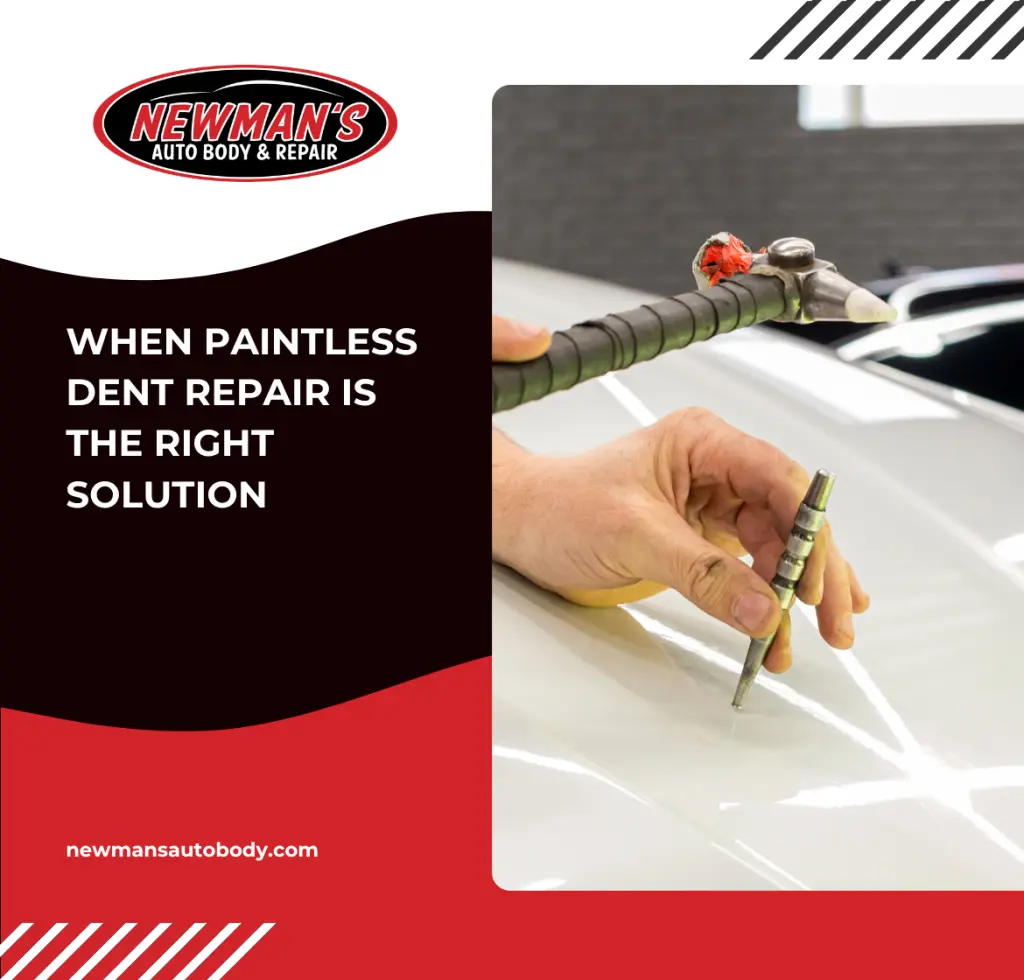
Paintless Dent Repair is a specialized repair technique that carefully reshapes damaged metal without using body filler, sanding, or repainting. Skilled technicians use specialized rods, picks, and precision lighting to gently massage dents back into their original shape while protecting the vehicle’s factory paint.
Paintless Dent Repair is commonly used for:
- Hail damage
- Door dings
- Shopping cart dents
- Minor creases
- Small impact dents
- Some shallow body panel damage
One of the biggest advantages of PDR is that it preserves the original factory finish. Because the paint remains untouched, there is no need to match colors or blend adjacent panels.
Professional paintless dent removal restores qualifying dents while helping preserve your vehicle’s original appearance.
The National Institute for Automotive Service Excellence (ASE) highlights the importance of proper repair procedures and technician training to ensure quality vehicle repairs.
When Paintless Dent Repair Is the Best Choice
Paintless Dent Repair delivers the best results when several conditions are present. While every vehicle must be evaluated individually, technicians generally recommend PDR when:
- The paint has not cracked or chipped.
- The dent is relatively shallow.
- The metal has not stretched significantly.
- The damaged area is accessible.
- The panel does not have severe body line distortion.
- There is no structural damage.
Many vehicles damaged during Kansas hailstorms qualify for Paintless Dent Repair because hail often creates numerous small dents without damaging the paint surface. Since PDR preserves the original finish, it also helps maintain the vehicle’s appearance and resale value.
Even if multiple dents are present across the hood, roof, or trunk, Paintless Dent Repair may still be an effective solution when the damage meets these conditions.
Common Types of Damage That Qualify for Paintless Dent Repair
Many everyday incidents produce damage that can often be repaired using Paintless Dent Repair.
Common examples include:
- Hail damage
- Door dings
- Shopping cart impacts
- Minor parking lot damage
- Baseball or softball impacts
- Fallen tree branches
- Small object strikes
Although these dents may appear similar, technicians carefully inspect each one before recommending repairs. Factors such as dent location, metal thickness, panel design, and paint condition all influence whether PDR will produce the desired result.
A professional inspection helps ensure the repair method matches the specific damage rather than relying on assumptions based solely on the dent’s appearance.
When Traditional Auto Body Repair Is a Better Option
Paintless Dent Repair is an excellent option for qualifying damage, but it cannot correct every type of dent. Some impacts permanently stretch the metal or damage the paint, making conventional repair methods necessary.
Traditional repairs may be recommended when:
- Paint is cracked, chipped, or peeling.
- Metal has stretched significantly.
- Sharp body lines have been severely damaged.
- Structural damage is present.
- Body panels require replacement.
- Aluminum damage exceeds PDR limitations.
Professional auto body repair restores damaged panels through refinishing, panel replacement, and manufacturer-recommended repair procedures when Paintless Dent Repair is not appropriate.
The I-CAR Repairability Technical Support (RTS) portal provides manufacturer repair information that helps technicians determine proper repair procedures for modern vehicles.
Why a Professional Inspection Matters
Not every dent tells the complete story. Two dents that appear nearly identical may require entirely different repair methods depending on the condition of the metal and paint.
During a professional inspection, technicians evaluate:
- Paint integrity
- Dent depth
- Metal stretching
- Panel accessibility
- Damage along body lines
- Overall repair feasibility
This evaluation allows technicians to determine whether Paintless Dent Repair can restore the panel without compromising quality. If PDR is not appropriate, they can recommend conventional repairs that safely restore the vehicle.
Attempting DIY dent removal using suction cups, heat, or online repair kits may worsen the damage, crack the paint, or stretch the metal further, resulting in more expensive repairs later.
The National Highway Traffic Safety Administration (NHTSA) emphasizes the importance of maintaining vehicles in safe operating condition after damage, particularly when repairs involve vehicle structure or safety-related components.
Benefits of Choosing Paintless Dent Repair
When the damage qualifies, Paintless Dent Repair offers several advantages over conventional repair methods.
Benefits include:
- Preserves the factory paint finish
- No body filler required
- No repainting
- Faster repair times in many cases
- Lower repair costs for qualifying damage
- Maintains the vehicle’s original appearance
- Environmentally friendly repair process due to fewer materials
Because the original finish remains intact, there is no risk of paint color mismatch between repaired and adjacent panels. Many vehicle owners also appreciate that Paintless Dent Repair allows them to keep as much of the original vehicle as possible while restoring its appearance.
Another important advantage is that Paintless Dent Repair is a minimally invasive process. Since technicians reshape the existing metal instead of replacing parts or applying fillers, much of the vehicle’s original construction remains untouched. Preserving the factory finish is valuable because original manufacturer paint is applied under carefully controlled conditions and is generally considered the highest-quality finish on the vehicle. Maintaining that finish can help support the vehicle’s appearance and resale value over time.
Paintless Dent Repair can also simplify the overall repair process. Conventional body repairs often involve multiple stages, including sanding, filling, priming, painting, and curing before the vehicle is ready for reassembly and inspection.
When PDR is an appropriate option, many of these steps are unnecessary, allowing repairs to be completed more efficiently while still producing professional results. Although repair times vary depending on the number and size of dents, many drivers appreciate returning to the road sooner.
In addition, Paintless Dent Repair uses fewer repair materials than traditional methods because no fillers, primers, or paint products are required. This reduces waste while preserving more of the vehicle’s original components.
The National Institute for Automotive Service Excellence (ASE) recommends having vehicle damage evaluated by qualified professionals to determine the repair method that best restores the vehicle’s condition and safety.
Choosing an Experienced Paintless Dent Repair Facility
Although Paintless Dent Repair appears simple, producing excellent results requires extensive training, specialized tools, and significant experience. Poorly performed PDR can leave visible imperfections or even create additional damage.
When selecting a repair facility, look for:
- Experienced technicians
- Specialized PDR equipment
- Modern inspection tools
- OEM-focused repair philosophy
- Strong customer reviews
- Thorough quality inspections
A reputable repair facility should carefully inspect your vehicle before recommending repairs and explain why Paintless Dent Repair is—or is not—the appropriate solution. If additional damage is discovered, they should clearly communicate your options and answer any questions before work begins.
Drivers can learn more about Newman’s Auto Body & Repair and the company’s commitment to professional dent repair and collision restoration. Shops that maintain OEM Certifications also demonstrate a commitment to following manufacturer repair standards whenever applicable.
The Society of Collision Repair Specialists (SCRS) provides industry resources that support safe and proper collision repair practices.
Frequently Asked Questions
Does every dent qualify for Paintless Dent Repair?
No. Paintless Dent Repair is only recommended when the paint remains intact, and the metal has not been significantly stretched or damaged.
Is Paintless Dent Repair commonly used after hailstorms?
Yes. Many hail-damaged vehicles qualify for Paintless Dent Repair because hail often leaves shallow dents without damaging the paint.
Will Paintless Dent Repair affect my factory paint?
No. One of the primary benefits of Paintless Dent Repair is preserving the original factory finish.
How long does Paintless Dent Repair take?
Repair time depends on the number and severity of dents, but many PDR repairs are completed faster than conventional body repairs.
Is Paintless Dent Repair less expensive?
For qualifying damage, Paintless Dent Repair is often less expensive because it eliminates the need for body filler, sanding, and repainting.
Can aluminum panels be repaired using PDR?
Some aluminum panels can be repaired using Paintless Dent Repair, although aluminum behaves differently than steel and requires specialized experience.
How do I know which repair method is right?
A professional inspection is the best way to determine whether Paintless Dent Repair or traditional auto body repair will safely restore your vehicle.
Ready to Restore Your Vehicle Without Traditional Bodywork?
Paintless Dent Repair is an excellent solution for many types of minor vehicle damage, especially when the factory paint remains intact. However, every dent is unique, and determining the best repair method begins with a professional inspection. Whether your vehicle has sustained hail damage, door dings, or minor parking lot dents, choosing an experienced repair facility helps ensure quality workmanship and lasting results.
If your vehicle has dents that may qualify for Paintless Dent Repair, visit Newman’s Auto Body & Repair at 611 S Fir St, Olathe, KS 66061, United States. Our experienced team will inspect your vehicle, explain your repair options, and recommend the solution that best restores your vehicle’s appearance while protecting its long-term value.
