
SUMMARY
- Advanced Driver Assistance Systems (ADAS) rely on cameras, radar sensors, and other technologies to help improve vehicle safety.
- Many collision repairs require ADAS calibration before the vehicle is returned to the road.
- Even minor accidents can affect the alignment of cameras and sensors.
- Driving without proper calibration may reduce the effectiveness of important safety features.
- Professional calibration follows manufacturer recommendations and specialized repair procedures.
- Modern vehicles often require calibration after repairs involving bumpers, windshields, suspension components, or structural parts.
- Drivers in Olathe, KS should choose a repair facility that understands today’s advanced vehicle technology.
- Newman’s Auto Body & Repair helps restore vehicles with customer-focused service and repair procedures designed to support modern safety systems.
Modern vehicles are smarter than ever before. Features such as automatic emergency braking, lane departure warning, blind spot monitoring, and adaptive cruise control help drivers avoid accidents and improve road safety. These technologies all rely on Advanced Driver Assistance Systems, commonly known as ADAS.
After a collision, many vehicle owners focus on visible damage like dents or broken bumpers. However, even a relatively minor accident can affect the cameras, radar sensors, and electronic components that support these advanced safety features. Without proper calibration, these systems may not perform as intended.
For drivers throughout Olathe, KS, understanding the importance of ADAS calibration can help ensure your vehicle is repaired safely and returned to the road with confidence.
What Is ADAS?
ADAS stands for Advanced Driver Assistance Systems.
These technologies are designed to assist drivers by monitoring the road and helping reduce the likelihood of accidents.
Common ADAS features include:
- Automatic emergency braking
- Adaptive cruise control
- Blind spot monitoring
- Lane departure warning
- Lane keeping assistance
- Rear cross-traffic alert
- Parking sensors
- Forward collision warning
These systems depend on cameras, radar sensors, ultrasonic sensors, and sophisticated onboard computers working together accurately.
Why ADAS Calibration Is Necessary
Following a collision, sensors may shift by only a few millimeters.
Although this movement may seem insignificant, it can affect how the system interprets distances, lane markings, surrounding vehicles, and obstacles.
Proper calibration restores these components according to manufacturer specifications.
According to the National Highway Traffic Safety Administration, advanced driver assistance technologies are designed to improve vehicle safety when functioning correctly and should be properly maintained after repairs.
When Does a Vehicle Need ADAS Calibration?
Many drivers assume calibration is only required after a major accident.
In reality, calibration may be necessary after:
- Front-end collisions
- Rear-end collisions
- Side impacts
- Windshield replacement
- Suspension repairs
- Wheel alignment
- Bumper replacement
- Structural repairs
Even relatively minor repairs can affect sensor positioning.
An experienced repair facility evaluates each vehicle individually to determine whether calibration is recommended.
Why Proper Calibration Protects Driver Safety
ADAS technologies constantly monitor road conditions while you drive.
Improperly calibrated systems may:
- Detect objects too late
- Misjudge following distance
- Fail to recognize lane markings
- Trigger unnecessary warnings
- Reduce emergency braking performance
Because these systems support important safety functions, calibration should never be overlooked after qualifying repairs.
The Insurance Institute for Highway Safety continues to report that advanced safety technologies can help reduce certain types of crashes when functioning properly.
Calibration Is More Than Connecting a Computer
Many drivers believe calibration simply involves plugging a vehicle into diagnostic equipment.
In reality, the process is much more involved.
Calibration often requires:
- Manufacturer repair procedures
- Specialized equipment
- Controlled shop conditions
- Precise measurements
- Diagnostic scans
- Quality verification
Every manufacturer has specific calibration requirements that technicians must follow carefully.
Repair facilities that invest in proper equipment and technician education are better prepared to complete these procedures accurately.
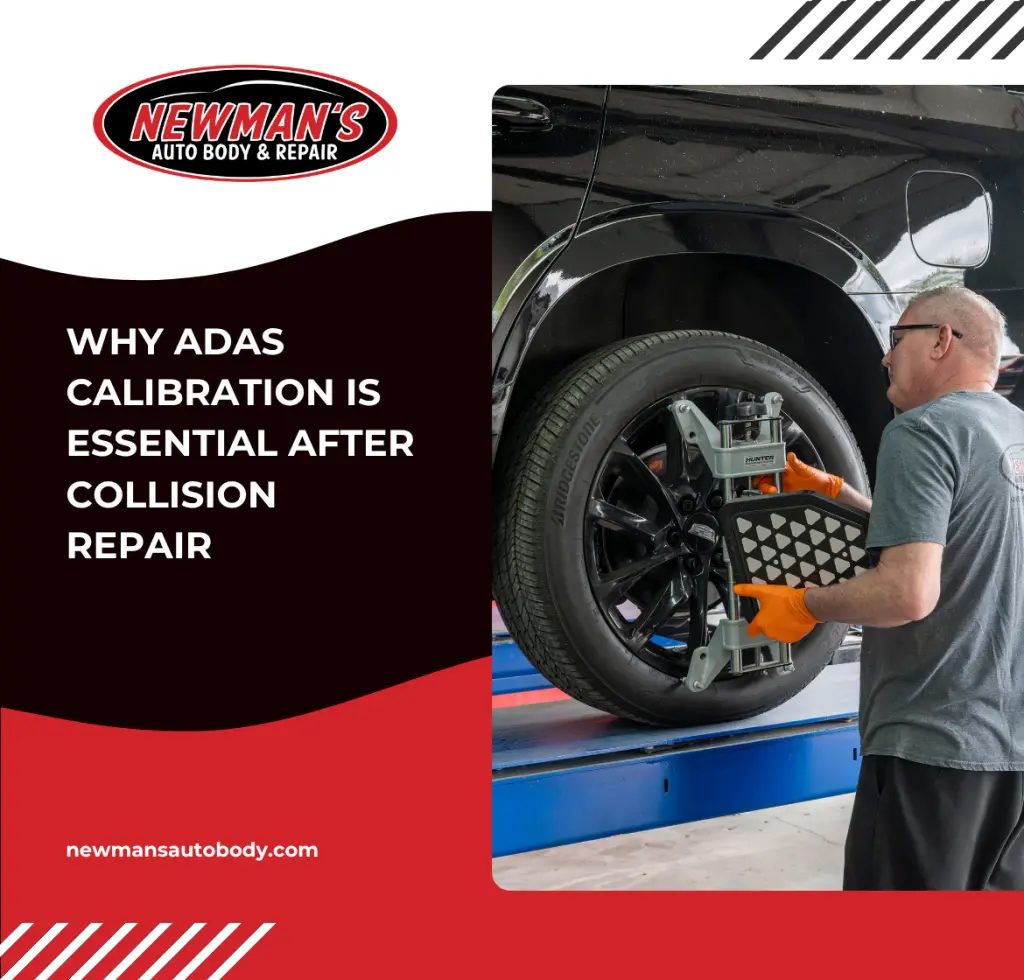
Some vehicles require static calibration, which is performed inside the repair facility using specialized targets, measuring equipment, and carefully controlled lighting and floor conditions. Others require dynamic calibration, where technicians drive the vehicle under specific road and weather conditions so cameras and sensors can recalibrate while the vehicle is in motion. In many cases, a single vehicle may require both procedures before the calibration process is considered complete.
Calibration is also closely tied to other repair steps. Before sensors can be calibrated, technicians may need to verify wheel alignment, inspect suspension components, confirm structural measurements, and ensure replacement parts have been installed correctly. If any of these areas are out of specification, the calibration may fail or produce inaccurate results. This is why experienced technicians follow manufacturer repair procedures in the proper sequence rather than treating calibration as a standalone task.
For drivers in Olathe, KS, understanding the complexity of ADAS calibration highlights the importance of choosing a repair facility equipped to work on today’s technology. Newman’s Auto Body & Repair recognizes that accurate calibration requires much more than diagnostic software. It requires trained technicians, specialized equipment, careful attention to detail, and a commitment to following manufacturer recommendations so advanced safety systems can perform as intended after collision repairs.
Why Modern Collision Repair Has Changed
Today’s collision repairs involve much more than repairing body panels.
Vehicles now contain dozens of electronic systems that communicate with one another.
Repairs often involve:
- Diagnostic scanning
- Structural inspections
- Sensor verification
- Software checks
- ADAS calibration
- Final quality inspections
Understanding OEM Certifications can help drivers appreciate why manufacturer repair procedures play such an important role in today’s collision repairs.
Modern vehicles are built with advanced materials and safety technology that require a more precise repair approach than older vehicles. High-strength steel, aluminum components, crumple zones, cameras, radar sensors, and electronic modules must all be evaluated carefully after a collision. A repair that looks good from the outside may still be incomplete if the vehicle’s safety systems, structural measurements, or electronic communication networks have not been properly inspected.
This is why today’s collision repair process often includes both hands-on craftsmanship and advanced diagnostics. Technicians may need to scan the vehicle before repairs begin, follow manufacturer repair instructions during the repair process, and complete post-repair scans or calibrations before delivery. These steps help confirm that important systems are communicating properly and that safety features are functioning as intended.
For drivers in Olathe, KS, this shift means choosing the right repair facility matters more than ever. The best shops understand that modern repairs are not just about restoring appearance. They are about restoring confidence, safety, and performance. Newman’s Auto Body & Repair focuses on repair procedures that support today’s advanced vehicle designs while keeping customers informed throughout the process. By combining technician expertise, updated repair information, and customer-first communication, the team helps ensure each repair is handled with the attention modern vehicles require.
Choosing the Right Repair Facility
Not every repair shop performs ADAS calibration or understands when it is required.
When comparing repair facilities in Olathe, KS, ask questions such as:
- Does my vehicle require calibration?
- Which safety systems are affected?
- Are manufacturer procedures followed?
- How is calibration verified?
- Will diagnostic scans be completed?
Many drivers assume that all collision repair facilities perform identical repair procedures. In reality, technician training, calibration equipment, and repair capabilities can vary considerably.
According to I-CAR, ongoing technician education helps collision repair professionals keep pace with rapidly changing vehicle technology.
The Consumer Reports also recommends choosing repair facilities based on qualifications, repair quality, and transparency rather than focusing only on price.
Newman’s Auto Body & Repair understands the importance of modern repair procedures and works to help customers understand why proper calibration is an essential part of restoring today’s vehicles.
Frequently Asked Questions
1. What does ADAS stand for?
ADAS stands for Advanced Driver Assistance Systems, which include technologies designed to help improve driver awareness and vehicle safety.
2. Is ADAS calibration always required after an accident?
Not always. The need for calibration depends on the type of damage, the repairs performed, and manufacturer recommendations.
3. Can a minor accident affect ADAS?
Yes. Even a small collision can shift sensors or cameras enough to require calibration.
4. Why is calibration important?
Calibration helps ensure cameras and sensors provide accurate information to the vehicle’s safety systems.
5. Does windshield replacement require calibration?
Many vehicles require ADAS calibration after windshield replacement because forward-facing cameras are often mounted to the windshield.
6. How long does ADAS calibration take?
The process varies depending on the vehicle and the systems involved, but it is an important step that should not be rushed.
7. Can I drive without ADAS calibration?
Depending on the repairs performed, driving without proper calibration may reduce the effectiveness of important driver assistance features.
8. Why choose Newman’s Auto Body & Repair?
Newman’s Auto Body & Repair combines experienced technicians, modern repair technology, and customer-focused service to help restore your vehicle’s appearance and advanced safety systems after a collision.
Conclusion
Advanced Driver Assistance Systems have become an important part of modern vehicle safety, making proper calibration an essential step after many collision repairs. Even small changes in sensor alignment can affect how these systems respond to road conditions, which is why professional inspections and manufacturer-recommended calibration procedures are so important. Choosing a repair facility that understands today’s technology helps ensure your vehicle is restored with both safety and performance in mind.
If your vehicle has been involved in a collision in Olathe, KS, Newman’s Auto Body & Repair is committed to providing professional repairs and helping customers understand every step of the repair process. Visit 1551 S Hamilton Cir, Olathe, KS 66061, United States, to speak with the team and learn how proper ADAS calibration helps restore confidence every time you get behind the wheel.
